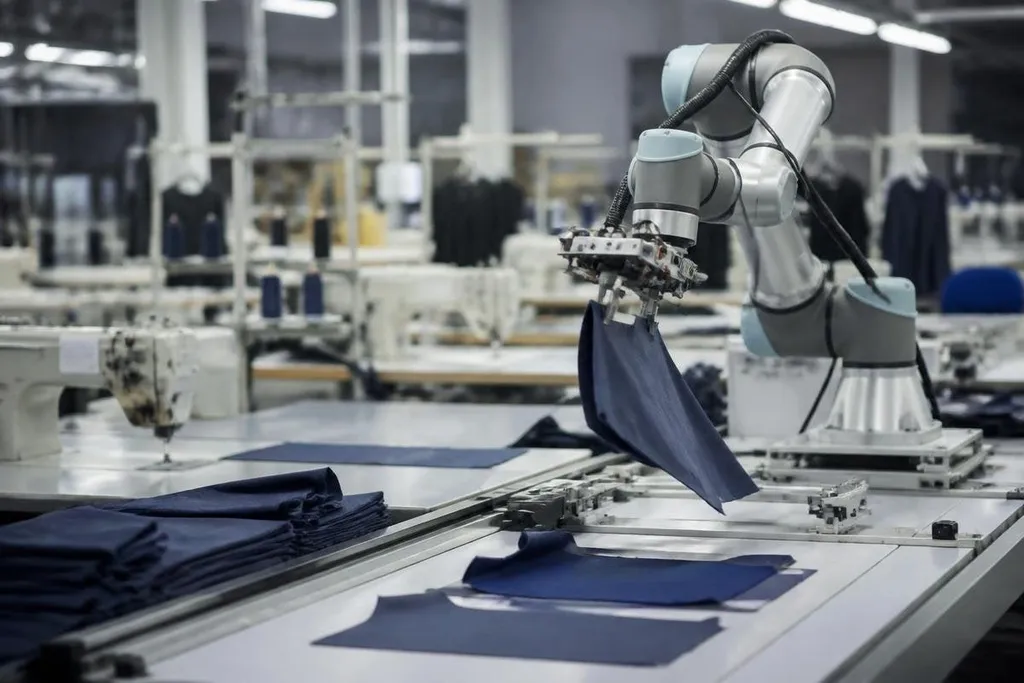
Fashion robots will face a harder test than moving boxes. Fabric bends, stretches, folds, and changes shape as a tool touches it. Any useful system must handle those changes while keeping seams, cuts, or folds within a measured range.
- The task comes first: sewing, cutting, folding, and inspection need different robot designs.
- The proof must be physical: cycle time, defect rate, fabric type, and human help matter more than a polished demo.
- The buyer needs a limit: a robot that works on one fabric may fail on another.
Where fashion robots have to work
A robot for fashion production may handle fabric rolls, place panels, guide cloth beneath a needle, inspect seams, or sort finished items. These jobs look related, but each one needs a different mix of sensing, grip, movement, and software.
Rigid parts are easier to move because their shape stays fixed. Cloth does not offer that benefit. A gripper can pull a sleeve out of shape, while a camera may see a fold as a damaged edge. The robot needs feedback from each step, not one fixed motion repeated all day.
That makes fabric handling a useful test of robot control. The system must find an edge, hold the material without marking it, and place it in the right position. A small error can change a seam or leave extra cloth near a cut.
The numbers a buyer should ask for
A vendor should describe the task in terms that another factory can check. “Automated sewing” says little until the buyer knows the fabric, garment part, speed, and error rate.
Ask for the cycle time for one finished action. Ask how many pieces pass inspection without a person fixing them. The report should also name the fabric type and thickness, since performance on a stiff panel may say little about thin or stretchy cloth.
Changeover time matters too. A factory may run several designs in one shift, so a system that needs long manual setup can lose its value between batches. The same test should record how often a person repositions fabric, clears a fault, or takes over the task.
Fabric can shift under a gripper, so the record should show the material, tool, task, and result. A source-based report from Robot24 can place a fashion robot’s claimed task beside those test details before you judge its value between batches.
What the next systems must handle
The useful step forward will come from better control of soft materials. Cameras can locate edges and seams, force sensors can detect contact, and software can adjust a robot’s path when fabric shifts. Each part helps, but the full task still needs a repeatable test.
A system may also need to work beside people. That means clear stop controls, safe speed limits, and a work area where a person can remove a jam without reaching through moving parts. Safety claims need a stated setup and test method.
The open question is how much setup each garment requires. If a technician must teach every new shape by hand, the robot may fit a narrow production run. If the system can accept new patterns with a short setup, it could suit factories with frequent design changes.
No evidence pack was supplied here to show which current product meets that standard.
What is still unproven
The hardest claims are the ones that skip the fabric. A video may show a robot placing one panel under controlled conditions. That does not establish performance across cloth types, garment sizes, lighting changes, or a full shift.
The buyer should also separate motion from finished quality. A robot can move quickly and still produce poor seams. A slower system may make fewer errors, but only a measured trial can show whether the difference pays for the equipment.
I'd wait for reports that name the fabric, task, cycle time, defect rate, and amount of human help. Without those details, a fashion robot is a demonstration, not a production decision.
A practical buying checklist
Use these points before asking for a quote:
- Name the material: record fabric type, thickness, stretch, and surface finish.
- Define the task: specify the exact cut, seam, fold, inspection, or transfer.
- Measure the result: count accepted pieces, rework, faults, and person-led interventions.
- Time the changeover: record setup for a new pattern, size, or garment part.
- Inspect the safety setup: check stops, access points, speed limits, and jam recovery.
- Price the full cell: include tooling, training, service, software, and floor space.
Fashion robotics will earn its place through repeatable work on named materials, not through a single clean clip. The next useful report is the one that shows the same task across a full shift and states how many pieces needed a person.